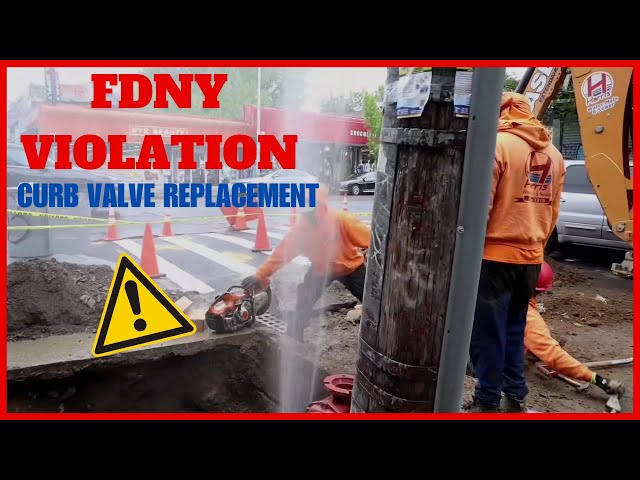


How Sewer Pipes Can Suddenly Fail and Damage NYC Homes
You go to bed with normal drains, and by morning, a floor drain burps, a toilet gurgles, or the basement smells off. NYC streets, mixed soils, and aging laterals mean small weaknesses can flip to full failure fast. If you remember one thing, document your line with a camera before the next storm and keep records of any sewer line repairs you have made so you can act early instead of reacting late.
1) Soil Washout After Nearby Water Work
A street excavation, hydrant flushing, or a minor leak can saturate the trench that holds your lateral. Saturated soil loses bearing strength. The pipe settles a half inch here, a quarter inch there, and suddenly you have a sag where solids park overnight.
- First signs
-
- Multiple fixtures are slowing down at once
- A faint sulfur odor near a basement cleanout
- A new puddle or soft spot in the yard
- How pros confirm it
- Camera pass with distance counter
- Measuring standing water depth through the sag
- Plan to regrade or replace the affected run
When settlement is tight to the curb or roadway, you want teams experienced in main sewer line repair who can handle permits, traffic control, and restoration.
2) A Spring Root Surge Finds the Weakest Joint
Roots do not wait for cracks. They make them. After a warm rain, fine feeder roots chase vapor through an old joint, expand, and turn a hairline into a plug overnight.
Two clues show up fast.
- A toilet that refuses to clear, even with light use
- A shower that drains alone but backs up when the washer runs
Cutting roots may buy time, but it is not the cure. The durable path is sealing or replacing the joint and checking adjacent segments. Teams focused on residential sewer pipe repair will map the intrusion points, show you the footage, and give you a fix that outlasts one season.
3) Wipes and Grease Create a Plug at a Bend
Labels say flushable. Field work says not really. Wipes, paper towels, and grease travel far enough to snag at a bend or joint lip. One dinner party plus a laundry cycle can push the line over the edge while you sleep.
Make prevention a habit.
- Use a small bin for wipes in every bathroom
- Strain kitchen sinks and trash, cooled grease
- Schedule a periodic cleanout if usage is heavy
When a plug forms, a team that performs sewer drain repair daily will clear the mass, smooth the problem transition if needed, and leave you with a short checklist so it does not return next month.
4) A Hidden Belly Finally Catches Enough Solids
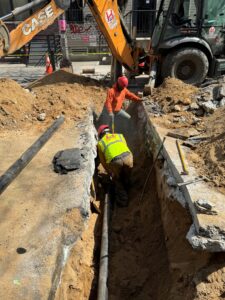
A belly is a sag where flow slows and solids settle. Causes include poor backfill, long-term soil movement, or heavy vehicle loading above the run. Once enough solids gather, last night’s usage flips a partial obstruction into a full blockage.
What verification looks like
- Camera footage shows water standing in the pipe
- Depth is recorded in inches with the location by footage
- Slope targets are set for the regrade plan
Small interior drains often run best near a 2 percent pitch, about a quarter inch per foot. Long exterior runs can work near 1 percent in rigid, smooth pipe. The right sewer line repair options range from spot excavation to structural lining when geometry allows.
5) Internal Corrosion Turns a Thin Spot Into a Crack
Cast iron can thin from the inside, especially across long, low-flow periods, where hydrogen sulfide converts to acid on the crown of the pipe. One heavy discharge hits the weak spot, and a hairline turns into an open leak.
Watch for these hints.
- A rust track or pinpoint drip under a hub
- Tink sounds like a scale falling inside a horizontal run
- Crescent-shaped defects on a camera pass
Ask for a plan that addresses all thin sections, not just the worst one, and make sure the scope clearly covers damaged sewer pipe repair rather than a short-term patch.
6) Brittle Pipe Shears After Freeze Thaw or Vibration
NYC frost depth is moderate, but unheated spaces and shallow exterior runs still see freeze-thaw cycling. Add street vibration or nearby jackhammering, and brittle materials like old clay or Orangeburg can shear at a joint overnight.
If the camera shows short offsets, delamination, or poor barrel condition, stop chasing isolated leaks. Bed new pipe on compacted, stable material, and correct slope while you are open. When deterioration is widespread, the right choice is to replace main sewer line segments that have aged out.
7) Storm Surcharge Pushes Back From the Street
Combined systems can pressurize during cloudbursts. Surge forces water and debris toward your house trap. If the trap is cracked or undersized, backflow can spike quickly and leave debris that stays after the storm.
Action steps after a surge
- Inspect your trap and the downstream run by camera
- Verify the last few feet near the city connection
- Consider a backwater valve if the lateral is sound
When damage concentrates near the connection, targeted street work with proper shoring and permits is the fastest permanent fix. Look for crews that offer complete sewer line replacement services with before-and-after video.
Prevention and Proof Plan You Can Start This Week
You cannot control storms or street work, but you can own your information. Build a simple file that includes diameter, material, and a diagram of cleanouts. Keep camera videos with distance counters so you always know where defects sit.
Quick win checklist
- Schedule a camera inspection every two to three years
- Confirm slope and bedding in writing before any excavation
- Keep trees at least ten feet from the lateral
- Keep the three Ps rule for toilets, and keep grease out of sinks
If you want a single starting point, book a professional sewer pipe service that includes a recorded camera pass and a written maintenance plan.
NYC Permits, Timelines, and Realistic Scopes
In the city, the lateral is typically your responsibility from the home to the public connection. That means permits, utility mark outs, traffic control, and surface restoration are part of a proper scope.
What to see in every proposal
- Depth, footage, diameter, and target slope
- Material type and compaction method
- Traffic plan and restoration details
- Before and after camera proof
Choose seasoned sewer line replacement contractors who explain each line item and give you a timeline that fits DOT and utility windows.
Disclaimer: This article is general and may not reflect NYC requirements. For NYC-specific guidance, contact Harris Water Main & Sewer Contractors.
Why NYC Homeowners Choose Harris Water Main and Sewers
New York conditions are unique. Mixed soils, tight access, and busy streets demand planning and precision. Our team handles diagnostics, excavation, trenchless methods where suitable, and full restoration. We show you the defect before we dig and the final result when it is complete. When you want a team of trusted sewer line plumbers, start with a clear diagnostic and a scope that fixes the cause, not just the symptom.
Do not wait for the next gurgle or basement odor. Get a resulting camera inspection and a written plan built for your block, your soil, and your fixtures. Harris Water Main and Sewers can inspect, design, and complete the work with minimal disruption. If you are ready for a reliable sewer line repair service, request your visit now.