
How To Read Your NYC DEP Lead Test Results Letter
If you just opened a letter from the NYC Department of Environmental Protection and you see “lead results” in parts per billion, take a breath. We read these letters every week across Brooklyn, Queens, Manhattan, and the Bronx. In this guide, we’ll walk you through what the numbers mean, what they say about your lead service line, and when it makes sense to plan a lead service line replacement with a licensed team like ours.
What The Letter Is And Why You Got It
The NYC DEP runs a free program that sends test kits to homes so you can check for lead in your tap water. You send two bottles back to the lab. A few weeks later, DEP mails your results. The letter is your lab report and next steps.
Inside the letter, you’ll see:
- Your address and test date
- Two results in parts per billion (ppb)
- A short section called “What Does This Mean?”
- A step-by-step list called “What Should I Do?”
Those two sections hint at whether the source is inside the building or coming from a lead water service line in the ground. If a lead pipe replacement is wise, the letter will say to use a licensed contractor lead service to inspect and replace the water service line.
First Draw Sample Vs Flushed Sample
Your kit has two bottles because lead behaves differently when water sits in pipes.
- Bottle 1: First Draw. This is the first splash from the tap after the water has been sitting for 6 hours or longer. It tells you what’s coming from nearby fixtures and the first lengths of pipe.
- Bottle 2: 1–2 Minute Flush. You run the water for a minute or two and then fill the bottle. This pulls water from deeper in the plumbing and from the service line.
Reading both is the key. If both the first draw and the flushed sample show measurable lead, the letter often points to a lead water service line as the likely source. That is when replacing lead pipes becomes the long-term solution.
What “ppb” Means In Simple Words
ppb stands for parts per billion. Think of it like tiny drops in a big bucket. Any amount of lead is something to take seriously, especially if there are children or a pregnant person in the home. The letter will not try to scare you. It simply explains the result and offers a plan to reduce exposure today while you decide about lead water line replacement tomorrow.
Our rule of thumb is simple. If the number is not zero, lower the risk right away with daily habits and start a lead service line replacement plan if the service line is confirmed as lead or galvanized steel.
What The Results Say About Your Plumbing
Here is how we read most letters in the field:
- Only the first draw shows a lead. This often points to faucets, old brass valves, or solder inside the home. We can help identify those parts and swap them out.
- Both bottles show lead. This often points to a lead water service line. In that case, replacing a water line from the street to the house is the clean fix.
- The flushed sample is higher than the first draw. That pattern also suggests the service line, not just fixtures.
Every property is different, which is why we confirm the material and condition before we talk about lead pipe removal or water service line replacement.
Immediate Steps To Reduce Lead In Tap Water
DEP gives simple steps in the letter. We repeat them on every visit because they work:
- Flush before use. Run cold water for 30 seconds or more if the tap has been idle for hours.
- Use only cold water for drinking and cooking. Hot water can pull more metals from pipes.
- Clean the faucet aerator each month. Sediment collects there.
- Use a certified filter if you want extra protection, especially for infants and pregnant people.
If you need details, you can request a kit or learn flushing and filter basics from the NYC DEP’s free lead testing program.
How We Confirm A Lead Service Line
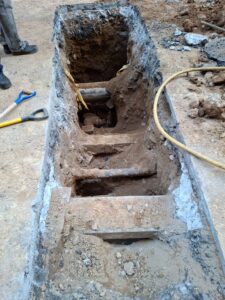
Before we talk about lead water pipe replacement, we confirm what’s in the ground. Here is how we do it:
- Meter inspection. We look at the pipe near the water meter or the curb valve. A dull gray pipe that scratches shiny can be lead.
- Magnet and scratch test. Lead is soft and non-magnetic.
- Historic records. We check old permits or building records when available.
- Camera and locate. We map the line, note depth and route, and mark the best access points for replacing a water line neatly.
This gives you a yes or no answer about the material and a clear map for lead pipe replacement.
Replacement Options: What Really Works
When a service line is lead, the honest fix is lead service line replacement. Here are the common paths we use, depending on your site:
- Open-cut replacement. We expose and remove the old lead line and install new copper in a straight, clean run.
- Pull-through techniques. In some cases, we can pull a new pipe through a guided path to reduce surface disruption.
- Partial vs full. We recommend full removal of lead. Partial swaps leave segments behind and can move particles, which is not what we want.
We do not recommend lining lead water pipes. Lining keeps the lead in the ground. Our goal is safe water and a clean record for your home.
Who Is Responsible For Replacing Lead Water Pipes
In most NYC homes, the property owner is responsible for the private lead water service lines that run from the building to the city main. The city owns and maintains the main street. Your DEP letter explains your role and points you to programs that can help with lead line replacement.
We guide homeowners through the steps, permits, and inspections so you are not dealing with city paperwork alone.
Service Line Replacement Cost: What Affects Price
Every service line replacement cost is unique. Here are the factors that move the number up or down:
- Length and depth of the run
- Access and route under sidewalks, stoops, or landscaping
- Material and soil conditions
- Permits and traffic control for your block
- Surface restoration after the work
To keep it fair, we give an itemized estimate that covers the lead water service line replacement and the restoration you will actually see when we are done.
Help From NYC: Programs And Funding
NYC has led service line replacement programs that are expanding to remove more lead pipes across the city. Some owners qualify for work at reduced or no cost. The exact rules can change, so the best move is to check the current NYC DEP lead service line replacement program and then call us. We will confirm eligibility, explain timing, and handle the technical steps.
Our Simple Replacement Plan
Here is how we take a letter and turn it into safe water:
- Review your letter together and confirm the material.
- Map the route from the main to your meter and plan access.
- Pull permits and schedule the day for lead water service
- Replace lead pipes with new copper, tested and documented.
- Restore surfaces neatly and leave you with photos and records.
We do this every week across Brooklyn, Queens, Manhattan, and the Bronx. You will have a clear schedule and a clean site when we leave.
A Simple Checklist To Read Your Letter
- Find the first draw and flush numbers in ppb
- Read “What Does This Mean?” for the likely source
- Follow the flush and cold water steps today
- Clean the faucet aerator this week
- Call us to confirm if you have a lead service line
- If confirmed, schedule the lead water pipe replacement
- Ask about the lead line replacement program to see if you qualify
Tape this list to the fridge while we plan your water service line replacement together.
Disclaimer: This article is general and may not reflect NYC requirements. For NYC-specific guidance, contact Harris Water Main & Sewer Contractors.
Call Us When You Are Ready
If you have a letter in your hand and you are not sure what to do next, we can help. We will explain the numbers, confirm the material, and give a simple plan for replacing a water line with new copper, start to finish. Our crews at Harris Water Main & Sewer work across the four boroughs every day, and we keep your home neat and safe.
Call Now or Schedule A Site Visit, and we will take it from here.