
Top 10 Costly Mistakes In Sewer Line Repairs
If you are facing a broken sewer line repair, the decisions you make on the first day can save or waste thousands. We work on sewer line repair every single week across Brooklyn, Queens, Manhattan, and the Bronx. After thousands of jobs, we keep seeing the same money-draining mistakes. Here are the top ten, with practical talk and real local examples, so you can avoid them and get the best result from your sewer line repair company.
1) Skipping A Camera Inspection Before Repair
Guesswork is expensive. A quick sewer camera shows cracks, offsets, bellies, and roots. It also shows where the pipe is healthy. Without video, many owners replace the wrong section, and the backup returns. We always start sewer line repairs with a camera and a line locate.
What to look for: slow drains, gurgling, sewage smells, or repeated clogs are common signs that sewer line repair is needed. The camera confirms the cause, then we plan the fix.
Queens example: a homeowner in Fresh Meadows had repeated clogs and was ready to dig the entire run. Our camera found one sharp offset near the curb. We replaced eight feet and added a cleanout. Flow restored, cost controlled.
2) Choosing The Wrong Sewer Line Repair Options
Not every problem has the same answer. Lining, pipe bursting, and excavation sewer line repair each fit certain situations. Lining is great for long cracks and minor offsets. Pipe bursting is smart when the line is badly worn but still passable. Open-cut is best for collapsed portions, bad grade, or when connections must be moved.
How we decide: we match the method to the video. This keeps plumbing sewer line repair targeted and avoids extra work.
Manhattan example: a small condo line had fine cracks and one branch connection to protect. Lining saved the slab and kept the unit clean. Picking the right sewer line repair options made it a single-day job.
3) Ignoring Permits And Street Rules On Main Lines
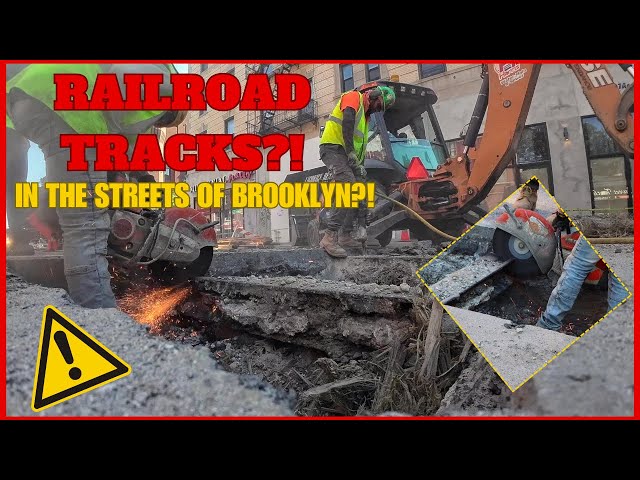
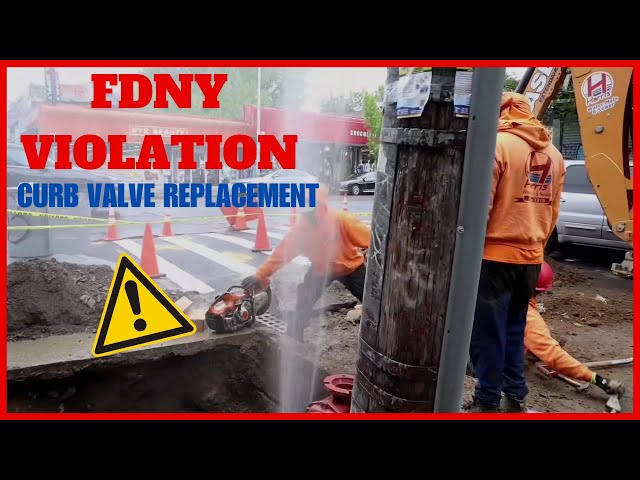
In New York City, the street and sidewalk come with rules. The main sewer line repair that touches the roadway needs the correct permits and traffic control. Skipping permits can stop a job, add fines, and force rework. We handle the paperwork and follow the NYC street opening permit rules so your project stays on track.
Brooklyn example: a curb-to-main tie-in in Bay Ridge needed roadway restoration. We scheduled the permit, set plates, and restored the patch correctly. Doing it right once costs less than doing it twice.
4) Lining A Pipe That Is Already Collapsed
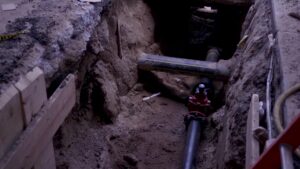
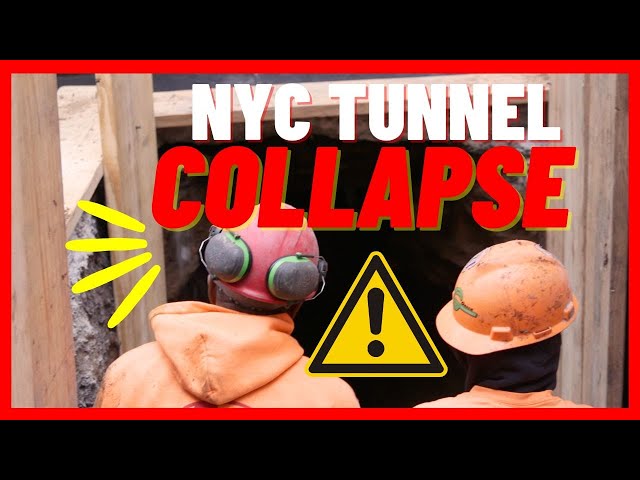
Lining cannot hold open a crushed pipe. If the host pipe is truly collapsed, you need collapsed sewer line repair with open-cut or pipe bursting. Trying to line a crushed spot often leads to wrinkles, poor flow, and another dig later.
Bronx example: a homeowner in Pelham Parkway asked for lining after a severe dip. The camera showed a flat section and a partial collapse. We replaced that short section, reset the slope, then lined the rest. No more surprise backups.
5) Replacing Too Much Or Too Little
Some contractors replace the entire line when a short section would do. Others patch one tiny spot and ignore the next two weak joints. Smart sewer line repair and replacement finds the balance. We use the camera to mark only the failing sections, then decide whether to replace, line, or burst the correct footage.
Why it matters: right-sizing the work keeps broken sewer line repair focused and saves your yard or sidewalk from unneeded damage.
6) Forgetting Cleanouts And Future Access
Cleanouts save money later. If you do not add a cleanout at the right spot, the next clog may need a new dig. When we finish sewer line repairs, we place cleanouts where they make real sense for future service. If a house trap is old or failing, we upgrade it too. Good access turns an emergency into a quick visit.
Queens example: a two-family in Jamaica kept calling for clogged sewer line repair. We installed a new cleanout near the trouble point and replaced one clay joint. Access now takes minutes, not hours.
7) Ignoring Slope And Negative Grade
If the line sags, solids settle, and flow slows. You can jet and snake all year and still get clogs if the slope is wrong. A camera shows bellies and flat runs. The fix is to reset the grade by replacing a short section or re-routing. Lining over a belly lock, the low spot is in place, but it does not solve the problem.
Manhattan example: an Upper West Side brownstone had yearly backups. We found a two-inch belly under a slab. A targeted open-cut corrected the slope. The owner has not called for damaged sewer line repair since.
8) Treating Roots Only At The Surface
Roots follow water and nutrients. If we only clear inside the pipe and never seal the joints or upgrade the short clay section that keeps leaking, the roots return. We clear the line, repair joint paths, and in root-heavy areas, we choose root-resistant materials for the bad stretch. That is the best sewer line repair when trees are nearby.
9) Underestimating Restoration, Traffic, And Time
Pavers, tree pits, sidewalks, and street plates add real cost and time. A cheap quote that skips restoration items often grows later. We price pipe work and restoration together from the start, so your sewer line repair company is not surprised by you mid-job.
What to ask: who restores the sidewalk, driveway, or patch? What is included in the schedule? Will a plate be needed? This is where a careful excavation sewer line repair plan pays off.
10) Delaying When It Is An Emergency
A backup at night can turn into floor damage by morning. Waiting raises the cost. Emergency sewer line repair often saves money by stopping damage early. If your toilet bubbles, drains gurgle, or a basement floor drain backs up, call fast. We answer 24/7 across the four boroughs.
Bronx example: a Saturday night backup in Morris Park. We cleared the line, found a cracked spot, and scheduled a short open-cut for Monday. Because they called right away, the cleanup was easy, and the repair was small.
Simple Cost Drivers To Plan For
Every residential sewer line repair is unique, but the main cost drivers stay the same:
- Length and depth: more feet and deeper trenches add time and shoring.
- Method: lining, pipe bursting, or open-cut, each has its own price point.
- Access: tight yards, stoops, and narrow alleys slow work.
- Restoration: sidewalks, pavers, and roadway patches are a real part of the budget.
- Permits and traffic control: city rules protect everyone and keep jobs safe.
Each of these drivers affects the main sewer line repair and also the smaller branch fixes. Clear line items help you compare sewer line repair companies fairly.
Your Step-By-Step Plan To Avoid Extra Costs
- Get a camera inspection: confirm cause and location before any dig. This keeps sewer line repairs
- Match the method: choose lining, bursting, or open-cut based on the video findings.
- Handle permits early: plan for traffic, plates, and restoration so your sewer line repair company stays on schedule.
- Fix slope issues: do not line over bellies. Correct the grade and then protect the line.
- Add access: place cleanouts where future service will be easy.
- Finish the site: restore sidewalks, pavers, and landscaping cleanly.
- Keep the video: ask for a copy before and after. It proves that the sewer line repair and replacement were done right.
Disclaimer: This article is general and may not reflect NYC requirements. For NYC-specific guidance, contact Harris Water Main & Sewer Contractors.
When To Call Us for Sewer Line Repairs
If you are seeing gurgling, slow drains, or a floor drain pushing water, do not wait. Call our team for emergency sewer line repair. We will bring a camera, show you the problem, and give options for the best sewer line repair at your address. We work across Brooklyn, Queens, Manhattan, and the Bronx every day, and we keep your home neat from start to finish.
Call Now or Schedule A Camera Inspection with Harris Water Main & Sewer, and we will take it from here.